The Institute for Archaeo-Metallurgical Studies has been involved in several highly significant projects since its inception in 1973. Several research projects are based mainly at the Institute of Archaeology, but also partner in several joint international projects. These projects have continuously refined our understanding of past metallurgical practices and many of their related activities. In addition, IAMS strives to encourage and support several students and scholars wishing to advance archaeo-metallurgical knowledge by providing financial aid to attend conferences and workshops.
Previous Research

- On the Origins of Metallurgy in Europe: Metal Production in the Vinča Culture. Miljana Radivojevic was currently involved in discerning the nature of the earliest smelting technology of the Old World in her current research on metallurgical remains from the Vinča culture (central Balkans), dating to c. 5400 to 4600 BC. This project will likely redefine our understanding of the emergence and spread of metallurgical technology.
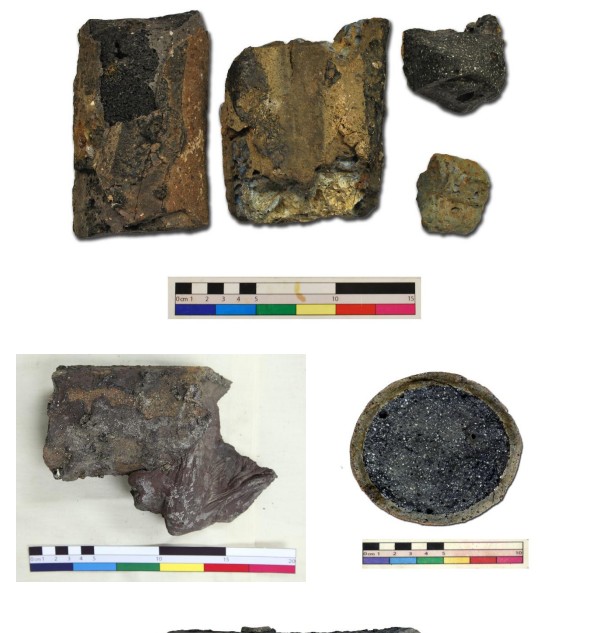
- Gold/Silver Production During the Historical Periods of China, 7th to 10th Centuries ADThis doctoral research project is being conducted by Siran Liu at UCL’s Institute of Archaeology and is aimed at deciphering technical and cultural choices in China’s Tang Dynasty’s gold/silver smelting technology and reconstructing the activities associated with this industry in the wider cultural and geological landscape of Jiangxi province.
- Timna Bronze Age Copper Mining and Smelting. Starting in 1964, Professor Beno Rothenberg has systematically surveyed and excavated the smelting sites of Timna in the Arabah Valley of the southern Negev. This project, spanning over 3 decades, directly led to the creation of IAMS and has been central to the Institute since its inception.
- Silver Mining and Smelting at Rio Tinto Excavations led by Professor Beno Rothenberg in the mines of Rio Tinto, south-west Spain, became the second major research project of IAMS. The investigation of Rio Tinto has presented an astonishing picture of large-scale silver mining and sophisticated smelting from the European Middle Bronze Age of the second millennium BC onwards. The scale of the operation was immense – the processing of silver ore has left millions of tons of lead-silver slag, which rises in mounds to heights of 20 metres and more. In the middle of this, there is an astonishing layer of Phoenician material, including Phoenician-influenced pottery and imported goods. There is a definite connection with the Biblical story (Ezekiel 27:12) about Tarshish and the huge Phoenician metal trade during the 8th-6th centuries BC. The basic metallurgy does not change from the earlier period, but there are huge differences in scale and efficiency, indicating that at this period, the Phoenician trading connections from the Middle East with mining in southern Spain became a major operation of great geopolitical significance.
- Iron Smelting in Modakeke, Ife, South Western Nigeria, a joint project with Dr Akin Ige from the Natural History Museum of the Obafemi Awolowo University in Nigeria, has aimed at shedding light on the little-studied iron smelting metallurgy of West Africa. Results have shown the iron metallurgy of this part of the world to be much more complex than previously thought, indicating the use of a mixed ore comprising limonite iron stone and ilmenite-rich black sand, which resulted in a titania-rich bloomery slag capable of extracting iron from the ore much more efficiently.