Global Reach and Capacity Building
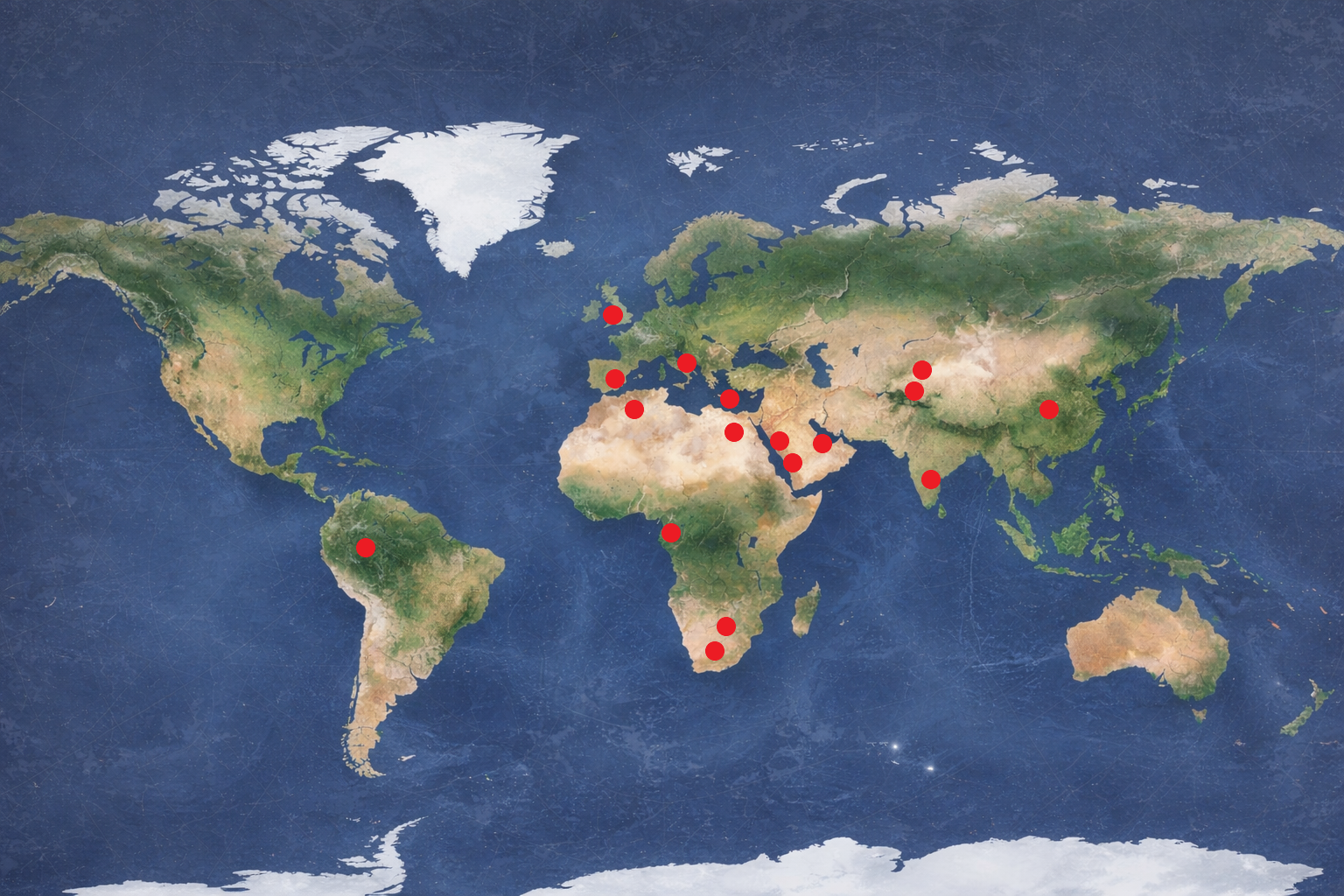
Since its founding, the Institute for Archaeo-Metallurgical Studies (IAMS) has played a central role in training successive generations of specialists in archaeo-metallurgy and allied disciplines. Through its teaching programmes, intensive courses, and research-led training, IAMS has provided rigorous methodological grounding while fostering interdisciplinary approaches that bridge archaeology, materials science, and cultural heritage studies. In parallel, the Institute has supported visiting scholars and doctoral researchers, creating an international intellectual environment that encourages collaboration, skills transfer, and long-term capacity building in the field.
From the 1990s onwards, IAMS significantly expanded its research portfolio through major, sustained investigations at Rio Tinto in southwest Spain, one of the world’s most important ancient mining landscapes. This work encompassed prehistoric, Phoenician, and Roman mining and smelting activities, combining large-scale fieldwork with laboratory analysis and experimental archaeology. These projects generated new insights into technological innovation, resource management, and the social organisation of metal production across millennia, and positioned Rio Tinto as a key comparative reference for studies of ancient metallurgy worldwide.
In the 21st century, IAMS further extended its global reach toward the Far East, supporting a series of doctoral research projects focused on diverse aspects of mining, smelting, alloying, and casting technologies. These projects have broadened comparative frameworks for understanding metallurgical traditions across Asia, strengthened international research networks, and reinforced IAMS’s role as a hub for advanced training and cross-cultural technological studies.
Together, these teaching and research initiatives demonstrate IAMS’s sustained commitment to scholarly excellence, international collaboration, and the long-term development of expertise in archaeo-metallurgy, ensuring enduring academic and cultural impact from continued investment.